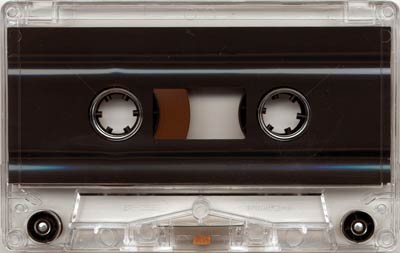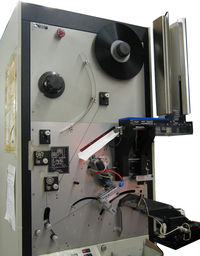

We also offer cassette duplication. Click here for an instant quote and to place your order.
| |||||
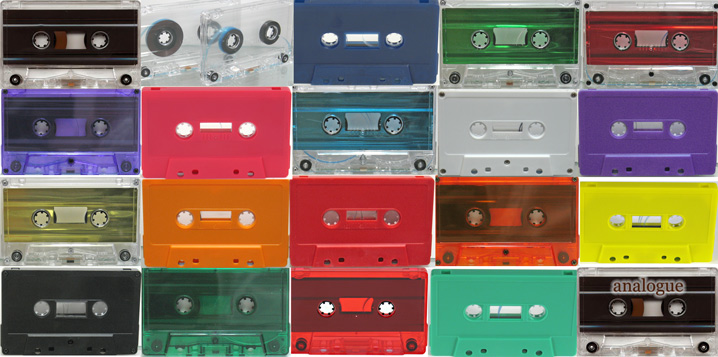
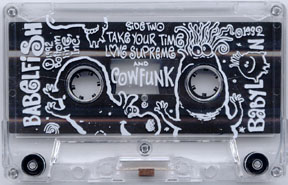
The plastic mechanism of an audio cassette is called a C-Zero.We load the tape into the C-Zero (or C-0) and then it becomes a C-30 or C-60 or C-90. See the available C-0s on our cassette selection guide
|
|||||
|
|||||
|
Terms: Tapes are made on order to exact length (tolerance: +- 10 seconds). Your order must be paid in full before the tapes are loaded - regular clients excepted. Transport charges are not included.
Tip!
If your program has lots of high-frequency content we recommend using high-bias or chrome tapes at normal (120 uS) equalisation. In order to do this you must have separate bias and eq switches on your cassette decks. When recording, set your bias to high (or chrome) position, and set your EQ to 120 uS (normal eq). This will allow much higher levels without compressing or distorting your high frequencies. The tradeoff is a higher playback noise level. Recording Tips for Better Sounding Cassettes!Don't boost your high frequencies going to cassette tape to compensate for the loss of "brilliance". It will only get duller and more saturated.
The following methods might help to get more level, brilliance, and presence:
|
Our offices
Montreal (administration only)

Nuns' Island
Quebec

514-878-TAPE [8273]
800-777-1927

514-360-2944
Find on map
Ⓒ Analogue Media Technologies Inc. All Rights Reserved.


Ⓒ Analogue Media Technologies Inc.
All Rights Reserved.